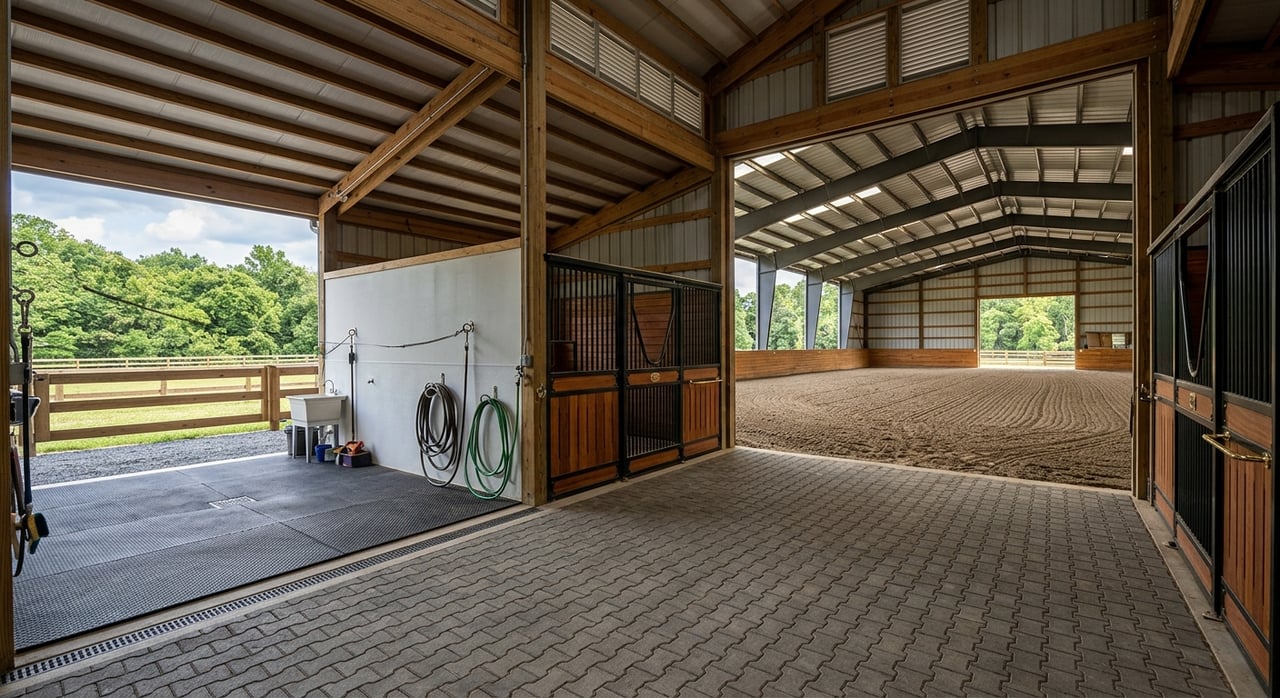
If you are shopping for an Ocala horse farm, it is easy to focus on acreage first. More land can sound like more opportunity, but for a training property, acreage is only the beginning. What matters more is how the farm works day to day, how it supports your horses in Ocala’s climate, and how well it connects to the region’s equestrian network. Let’s dive in.
Why Ocala farms need more than land
Ocala and Marion County sit in one of the country’s most active horse regions. Marion County describes the area as the Horse Capital of the World and states that 35% of Florida’s horses and 46% of the state’s thoroughbreds are in Marion County. That scale matters because it creates a dense support system for training, care, transport, and competition.
For you as a buyer, that means a farm should be judged by more than a gate, a barn, and open pasture. You also want to think about access to veterinarians, feed and tack suppliers, blacksmiths, equine dentists, transport companies, and major show venues. In Ocala, location inside the horse ecosystem can be just as important as the land itself.
Think in haul radius, not just acres
Ocala offers access to major equestrian venues, but those facilities do not replace what your private farm needs to do every day. World Equestrian Center hosts sanctioned shows across multiple disciplines and is described as the largest equestrian complex in the United States, yet it does not offer boarding, layup, or lessons. Florida Horse Park and HITS Post Time Farm add more local competition and schooling opportunities, but your home base still has to carry the daily workload.
That is why haul radius matters. A property that saves you time getting to showgrounds, veterinary care, or supply stops can support a smoother training routine. A farm with beautiful acreage but inefficient access may create more stress than value over time.
Local venues are a supplement
Florida Horse Park is a strong local resource with permanent stalls, multiple arenas, and cross-country features. Still, public riding and arena use are schedule-based and fee-based, and they require sign-in, a waiver, and Coggins documentation. If your home farm lacks a usable arena or reliable turnout, you may end up depending too heavily on someone else’s schedule.
A better strategy is to treat public venues as an advantage, not a crutch. Your private property should support regular flatwork, turnout, conditioning, and routine horse care even when weather shifts or venue access is limited.
Evaluate the farm as a working system
The best training farms feel easy to operate. Horses move safely, trailers can turn without drama, and service vehicles can get in and out without interrupting the day. That kind of function often tells you more than the total acreage on paper.
When you tour an Ocala horse farm, look at how the parts connect. Barns, paddocks, arenas, service areas, and access roads should work together as one system rather than a collection of separate features.
Check circulation and access first
A practical layout should support trailers, feed deliveries, manure pickup, and visits from veterinarians and farriers. Penn State notes that paddock planning should allow easy movement of horses and equipment, safe gate placement, and all-weather lanes that connect turnout to the stable. Those details can affect safety, efficiency, and wear on the property.
In a busy training setting, poor circulation creates daily friction. Tight turns, narrow gates, or muddy routes may not stand out in listing photos, but they can become real problems during show season or bad weather.
Ask how the farm handles service logistics
Ocala’s horse economy depends on organized support. Marion County highlights the local network of veterinarians, blacksmiths, equine dentists, feed and tack retailers, and horse transport companies. WEC also notes rules around outside farrier access, which is a reminder that equine properties run on coordination as much as appearance.
As you walk a property, ask practical questions. Where do trailers park? Where is manure stored? Can larger service vehicles enter and exit easily? How quickly can the property be supported during a stormy week or a busy winter show season?
Turnout matters more than buyers expect
Pasture is important, but more pasture is not always better if the land cannot hold up under use. UF/IFAS recommends rotational grazing systems and points out that overstocked or continuously grazed pasture can become bare, compacted, muddy, or dusty. On many training farms, a sacrifice lot or dry lot is not a compromise. It is a smart management feature.
This is especially important in Central Florida, where weather and traffic can quickly wear down heavily used areas. A farm that includes a planned all-weather turnout space may function better than one with larger but less manageable pasture.
Why a sacrifice lot can be a strength
If you board, train, or keep horses in regular work, you need turnout that stays usable in wet periods. UF/IFAS recommends a sacrifice area with water, feed access, and shade while other paddocks rest and recover. Penn State also reinforces the value of mud-free turnout built with drainage logic similar to an arena.
That means you should not dismiss a dry lot at first glance. On the right property, it can protect pasture health, reduce mud, and help maintain better footing during rainy stretches.
Barn design should support horse health
A barn can look polished and still fall short for daily horse care. Ventilation is one of the most important details to inspect because Ocala’s heat and humidity place extra demands on horse housing. Clean airflow is not a luxury feature here. It is part of sound management.
Penn State identifies inadequate ventilation as one of the most common mistakes in horse facilities. UF/IFAS also notes that stalled horses fed hay can face more barn-associated asthma risk, making low-dust bedding, good ventilation, and careful hay storage especially important.
Look for airflow, not just finishes
As you walk through a barn, pay attention to how open and airy it feels. Penn State recommends open interiors, open stall partitions, ridge and sidewall openings, and avoiding hay storage above stalls. A barn that traps heat, dust, and moisture may create long-term issues no matter how attractive the structure looks.
In Ocala, shade and water also matter. UF/IFAS advises that horses in hot, humid weather need constant access to clean water, shade, and often fans where horses gather. If a property struggles with airflow or shelter design, you may face more management challenges than expected.
Arena footing should be judged as a system
One of the easiest mistakes buyers make is judging an arena by the top layer alone. Good footing is not just what you see on the surface. The University of Kentucky explains that arena footing works as a system that includes the riding surface, a compacted base, and a sub-base that promotes drainage.
That is especially important in Ocala, where sudden rain and frequent use can expose weak construction quickly. A beautiful arena can ride poorly if the base is wrong or drainage is limited.
Questions to ask about the arena
Use a practical checklist when you inspect a ring:
- What is the base made of?
- How does the arena drain after rain?
- Is there a crown or another drainage strategy?
- How often is the footing watered or dragged?
- When was the footing last refreshed?
- Was the arena designed for the discipline you ride most?
The University of Kentucky notes that different disciplines often need different surface characteristics. A farm that works well for one program may not be ideal for another, especially if several disciplines share the same ring.
Use local venues as a benchmark
Florida Horse Park advertises clay/sand footing in its covered arena and fiber footing in its arena complex. WEC emphasizes modern materials, climate-controlled barns, and permanent stabling for nearly 3,000 horses. These venues can give you a useful reference point for the quality and consistency many Ocala riders expect.
You do not need a private facility that mirrors a showground. You do want a farm that supports safe, repeatable daily work without forcing constant compromise.
A smart Ocala tour checklist
When you tour horse farms, it helps to follow the same order every time. That keeps you focused on function before emotion. A pretty entrance can be appealing, but your real answers usually come from the working parts of the property.
Start with these five checks
Trailer access and gates
Can trucks and trailers enter, turn, and exit safely?Turnout design
Is there a sacrifice lot or all-weather paddock that can stay usable in wet weather?Barn air quality
Do the stalls feel open and ventilated, and is hay stored away from the horses?Arena footing
What sits beneath the surface, how does it drain, and how often is it maintained?Service radius
How close is the property to veterinary support, farrier services, feed suppliers, transport help, and show venues such as WEC, Florida Horse Park, and HITS?
This framework can help you compare farms clearly, even when the styles, prices, and acreage totals are very different.
The real question to ask
When you look beyond acreage, you start asking a better question: can this farm keep horses comfortable, support daily training, and stay workable through wet weather and summer heat? In Ocala, that is often the difference between a property that photographs well and one that truly performs.
For equestrian buyers, the right farm is both a home and an operating system. It should support your routine, your horses, and your goals with fewer workarounds and better long-term function. If you are weighing horse farms in Ocala or Marion County, a detailed, practical evaluation can make all the difference.
If you are ready to compare Ocala horse farms with a sharper eye for training function, location, and day-to-day usability, Laura Farr would be glad to help you navigate the market with a thoughtful, hands-on approach.
FAQs
What should buyers prioritize when evaluating an Ocala horse farm for training?
- Focus on how the property functions day to day, including turnout, barn ventilation, arena footing, trailer access, and proximity to Ocala’s equine services and show venues.
Why is acreage not enough for an Ocala training farm?
- Acreage alone does not tell you whether the farm can support daily riding, wet-weather turnout, horse health, or efficient service access in Marion County’s active equestrian environment.
What is a sacrifice lot on a Marion County horse farm?
- A sacrifice lot is a managed turnout area designed to stay usable while other paddocks rest, which can help protect pasture health and reduce mud on intensively used properties.
What should buyers inspect in a horse barn in Ocala, Florida?
- Look for open, well-ventilated barn design, low-dust conditions, shade, water access, and hay storage that is not directly above stalls.
How should buyers assess arena footing on an Ocala horse property?
- Ask about the full footing system, including the surface, base, sub-base, drainage plan, and routine maintenance such as dragging, watering, and refreshing materials.
How important is location near WEC, Florida Horse Park, or HITS in Ocala?
- Location can be very important because nearby venues, veterinary support, and equine services may save time, improve convenience, and strengthen a farm’s usefulness for training and competition.