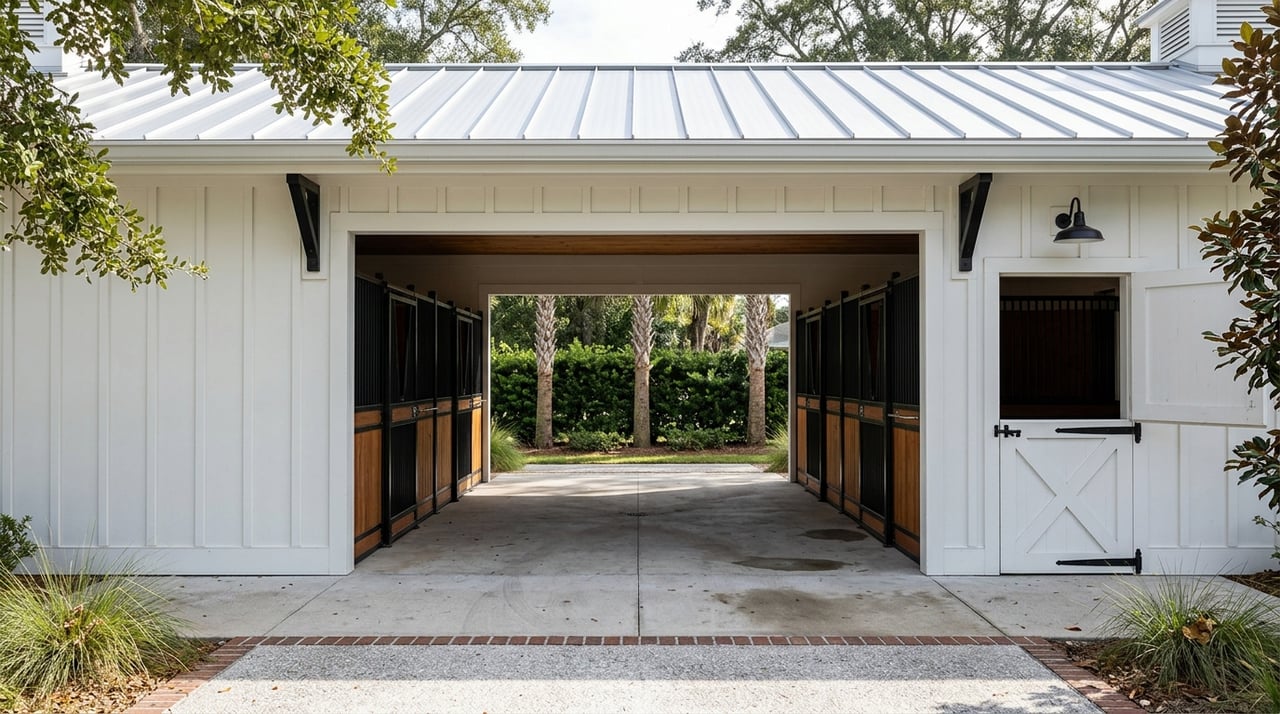
If you are shopping for an Ocala horse farm, one question tends to shape everything else: should you buy a property that is already built out, or start with raw land and create exactly what you want? In Marion County, that choice is about more than style or budget. It is also about zoning, drainage, flood exposure, well and septic logistics, and how your daily horse operation will actually function. This guide will help you compare both paths so you can move forward with more clarity and confidence. Let’s dive in.
Why Ocala changes the equation
Ocala and Marion County have a uniquely strong equestrian identity. County materials describe Marion County as the Horse Capital of the World and note that it has more horses and ponies than any other county in the United States. Local tourism materials also describe World Equestrian Center–Ocala as the largest equestrian complex in the country.
That matters because in this market, a horse farm is not just about acreage. Location, layout, and operational fit often matter just as much as the number of acres on the gate. A beautiful property can still be the wrong fit if the circulation, pasture setup, drainage, or improvements do not support how you plan to use it.
Buy established: the faster path
For many buyers, purchasing an existing horse farm is the more direct option. The basic framework is often already there, including access, fencing, paddocks, barns, and utility systems such as well and septic. That can reduce the number of moving parts between contract and first ride.
An established farm also lets you evaluate the property in real time. You can see how the barn sits on the land, how water moves after rain, how trailers enter and turn, and whether the overall layout feels practical for your horses and your routine.
What you may gain
Buying established usually offers a few clear advantages:
- Faster move-in timeline
- Existing infrastructure already in place
- A more visible sense of how the farm functions day to day
- Fewer early-stage permitting decisions than building from scratch
If you are relocating, buying seasonally, or trying to minimize project management, these benefits can be significant. They can also make budgeting easier because more of the physical systems already exist.
What you still need to investigate
A working farm can still come with hidden issues. The real diligence work is often about condition, compliance, and whether the current setup truly matches your goals.
Key items to review include:
- Roof age and general barn condition
- Footing and surface performance
- Drainage across paddocks and work areas
- Flood exposure and floodplain considerations
- Well and septic condition
- Permit and code history
- Whether the layout supports your operating plan
UF/IFAS notes that pasture performance depends on drainage and management. It also notes that manure handling needs a workable on-farm location, which is one more reason to look beyond curb appeal and focus on function.
Build new: the custom route
Building new appeals to buyers who have a very specific vision. If you know exactly how many stalls you want, where the arena should sit, how trailers should circulate, or how you want turnout and pasture rotation arranged, starting from raw land can give you more control.
That flexibility can be powerful in Ocala horse country, where day-to-day usability matters. A custom layout can be designed around your horses, your training rhythm, and the way you want the property to operate over time.
What you may gain
Building new gives you the chance to shape the farm around your priorities from day one. Instead of adapting to someone else’s plan, you can create a property that supports your intended use.
That may include control over:
- Stall count and barn placement
- Arena location
- Trailer access and circulation
- Pasture layout and rotation
- Turnout configuration
- Manure handling areas
- Storage and support buildings
UF/IFAS notes that pasture planning depends on soil drainage and management, and horse acreage needs can vary widely based on productivity and grazing intensity. In other words, a smart layout starts with the land itself, not just a sketch of the improvements.
What the process adds
The tradeoff is complexity. Marion County requires building permits for construction, and projects in flood zones can involve extra steps, including elevation certificates and licensed surveyor documentation during construction and again at completion.
Before you buy raw land, it is wise to confirm zoning and future land use with Marion County Growth Services and review the county’s land development framework. The county’s planning maps identify factors such as floodplains, wetlands, wellhead protection, and springs protection overlay zones, all of which can affect how and where you build.
The Marion County factors to check early
In many locations, buyers focus first on home style or barn size. In Marion County, the smarter move is often to begin with site constraints and approval pathways.
The county’s comprehensive plan and land development code guide zoning, future land use, infrastructure, environmental protection, and development procedures. That means a parcel that looks straightforward at first glance may still require a deeper review before it fits your intended use.
Site constraints that can affect both options
Whether you buy established or build new, check these items early:
- Zoning and future land use
- Floodplain location
- Wetlands
- Springs protection overlay zones
- Wellhead protection considerations
- Existing access and circulation
- Space for manure management
- Drainage patterns across the property
If you are considering a farm in a special flood hazard area, new construction requires a permit. Marion County also notes that finished-floor elevations generally must be at least one foot above base flood elevation where applicable, with licensed surveyor documentation for elevation certificates.
Existing farms can trigger compliance too
Floodplain rules are not only a new-construction issue. Marion County states that a substantial improvement is any repair or improvement that equals or exceeds 50 percent of a building’s market value.
That means a major renovation on an older farm can sometimes trigger additional floodplain compliance. If you are buying an established property with plans to renovate, it is smart to assess that risk early rather than late in the process.
Budgeting beyond the purchase price
Whether you buy or build, the land price is only one part of the financial picture. Ocala horse farms often involve several layers of infrastructure, review, and carrying costs.
A clearer budget usually starts by separating the project into practical buckets.
Core budget buckets
- Transaction and professional fees: closing costs, survey work, permitting review, and professional advice
- Site work: clearing, grading, driveway work, drainage, soil correction, and pasture establishment
- Water and wastewater: well permits, septic permits, pumps, irrigation, and testing
- Horse infrastructure: barn, stalls, feed and tack storage, fencing, paddocks, turnout, and manure management
- Carrying costs: taxes, insurance, and project-period interest
UF/IFAS advises that soil drainage should be considered when choosing forage. It also notes that manure-storage areas should be on flat, dry ground away from water resources, which can influence both design and cost.
Well and septic deserve close attention
In Marion County, private well and septic systems are common on farm properties. If a property already has them, ask for permit history, service records, and recent testing.
Marion County Health handles septic permitting and inspections locally. Florida Department of Health guidance recommends private-well bacteria and nitrate testing at least once a year, which makes recent test results an important part of your due diligence.
Agricultural classification and farm structures
If your intended use is agricultural, another layer to review is whether the parcel can plausibly qualify for agricultural classification. Marion County’s form cites a March 1 filing deadline and requires bona fide commercial agricultural use.
This is not something to assume based on appearance alone. A property may look like a farm and still require a careful review of its actual use, documentation, and timing.
Farm building exemptions may help
On bona fide agricultural land, Florida Statute 604.50 exempts certain nonresidential farm buildings, fences, and signs from the Florida Building Code and from county or municipal codes or fees, except for floodplain management rules. Marion County’s form lists examples such as barns, farm offices, and storage buildings.
That can be helpful for some buyers planning improvements. Still, it is important to verify exactly how the rule applies to your project before making budget or design assumptions.
Owner-builder rules should be verified
If you plan to self-manage construction, check the current owner-builder rules carefully. Marion County’s FAQ and current Florida statute language do not match on the threshold cited for qualifying farm outbuildings under the exemption.
When rules appear inconsistent, the safest move is to verify your specific situation with the appropriate local department before relying on a number you found online.
Which option fits your goals?
There is no one-size-fits-all answer in Ocala. The right decision depends on your timeline, your appetite for complexity, and how specific your operating needs are.
If you want speed, visible functionality, and less early-stage coordination, buying established may be the better fit. If you want precise control and are prepared for the permitting and site-planning process, building new may be worth the effort.
Buy established may fit you if
- You want to start using the property sooner
- You prefer to evaluate a working layout in person
- You want fewer construction decisions
- You are comfortable improving an existing setup over time
Build new may fit you if
- You need a highly specific barn and pasture plan
- You want to control circulation and facility placement
- You are prepared for permitting and design work
- You are willing to trade time for customization
Think about resale from the start
Even if this is your long-term farm, resale still matters. In Marion County, the features that often support resale are the same ones buyers tend to want in the first place: functional barns, usable pasture, sensible drainage, and a layout that does not force immediate rebuilding.
Highly specialized improvements can absolutely add value for the right buyer. At the same time, a very narrow setup may reduce the future buyer pool compared with a farm that can support a broader range of equestrian uses.
Build your team early
Horse farm purchases and builds usually go more smoothly when the right professionals are involved from the beginning. In Marion County, that can include county planning and zoning staff, a surveyor, a licensed contractor or equine builder, drainage or civil engineering support, well and septic contractors, and title and insurance professionals.
Having an equestrian-focused real estate advisor matters too. A farm is more than a house on acreage, and the details that shape value and usability are often the details casual buyers miss.
If you are weighing whether to build or buy in Ocala horse country, a thoughtful strategy can save time, protect your budget, and help you choose a property that truly supports your goals. If you would like guidance tailored to your priorities, connect with Laura Farr.
FAQs
What should you check before buying raw land for a horse farm in Ocala?
- Confirm zoning, future land use, floodplain status, wetlands, springs overlay zones, drainage, access, and whether the parcel can support your intended horse use.
What are the main benefits of buying an established horse farm in Marion County?
- Buying established is usually faster and may include existing barns, fencing, paddocks, access, and utility systems that reduce early development work.
What makes building a new horse farm in Ocala more complex?
- Building new adds permitting, site planning, possible flood-zone requirements, and coordination of infrastructure such as well, septic, drainage, and pasture layout.
Why does drainage matter on an Ocala horse farm?
- UF/IFAS notes that pasture performance depends on drainage and management, and drainage also affects turnout usability, footing, and manure handling.
Do Marion County flood rules matter for horse farm renovations?
- Yes. Marion County says a substantial improvement is any repair or improvement equal to or greater than 50 percent of a building’s market value, which can trigger floodplain compliance.
Should you request well and septic records when buying a Marion County farm?
- Yes. Ask for permit history, service records, and recent testing, especially since private well and septic systems are common on farm properties.