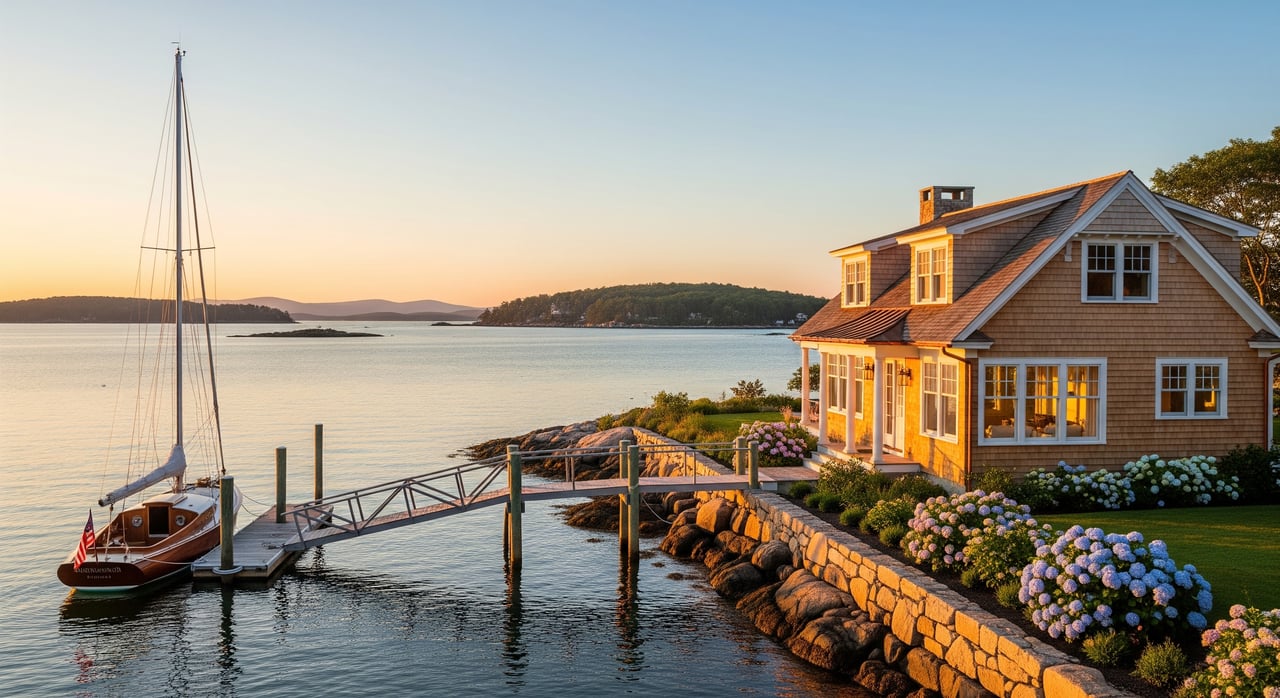
What if your morning started with a harbor walk, the soft clink of halyards, and coffee in hand while schooners ready for day sails? If you are picturing an easy, walkable routine with water views and a lively village at your doorstep, Camden’s harbor district delivers. In this guide, you’ll get a clear feel for daily life on Penobscot Bay plus practical tips for second‑home buyers and downsizers. Let’s dive in.
Harbor at a glance
Camden sits on Maine’s midcoast, where a compact harbor and village meet the hills that rise behind town. You’ll find a working and recreational waterfront with moorings, marinas, and parks, all centered around a small downtown of shops and restaurants. The year‑round population is in the low thousands, and it grows in summer with seasonal residents and visitors.
Access is straightforward by state and federal routes, with Rockland a short drive to the south for larger retail and services. For flights, the nearest regional airport is in the area, and Portland International Jetport is the closest major option for national routes.
Walkable village rhythm
If you live near the harbor, daily errands often happen on foot. The district is compact, with cafés, bakeries, restaurants, galleries, and the library in close reach. You can stroll along the water on public park paths and benches that invite a pause to watch boats come and go.
Expect a classic New England streetscape: historic buildings, specialty shops, and a mix of year‑round businesses and seasonal favorites. Summer brings more people and extended hours. Shoulder seasons feel quieter but remain active.
Sailing and boating access
Sailing is central to Camden’s identity. In summer, you’ll see a busy field of pleasure boats alongside working lobster boats and day‑sail schooners. Private and charter options are common, and local sailing schools and clubs add to the maritime culture.
Harbor logistics are managed by the harbormaster, with mooring fields, transient slips, and rules that keep traffic orderly. Mooring or slip availability can be limited, so plan ahead. If you are boat‑focused, ask about waitlists, tidal considerations, and winter storage before you buy.
Dining, shopping, daily needs
You have plenty of options for a relaxed meal, a special night out, or a quick pick‑up from a bakery or market. The harbor core leans boutique, so you’ll likely head to neighboring Rockland or Rockport for full‑size supermarkets and big‑box stores.
Daily services like banks, real estate offices, and insurance providers are close by, with more specialized services available in nearby towns. Many businesses run year‑round, though some shift hours or close in the off‑season.
Arts and culture nearby
Camden supports an active arts scene with galleries, community arts groups, and seasonal festivals. The library, historic societies, and civic organizations add depth to year‑round life. Camden Hills State Park sits right above town, and Mount Battie’s viewpoint is a favorite quick escape.
Close cultural neighbors enhance the mix. Rockland offers a larger arts infrastructure and museum experiences, while local venues in Camden keep a steady calendar of performances and community events.
Outdoor recreation beyond the harbor
You are never far from trails and coastline. Camden Hills State Park offers hikes with scenic outlooks, picnic spots, and easy-access loops. In winter, local hills and community programs support snowshoeing and cross‑country outings, and small alpine venues may operate nearby when conditions allow.
If you enjoy day trips, ferries run from nearby Rockland to islands in Penobscot Bay, opening up a wider world of coastal exploration.
How seasons shape daily life
High season: late spring to early fall
Summer is lively. The harbor fills with transient vessels, outdoor dining expands, and cultural events stack the calendar. The weather is mild and inviting for walks, sails, and patio meals.
Plan for more traffic and tighter parking near the harbor at peak times. Many residents choose early morning or later evening outings for a calmer pace.
Shoulder seasons: spring and fall
These months bring a sweet spot of quieter streets with plenty to do. You can enjoy the coast without peak crowds, and fall foliage adds color to every view.
Some businesses scale back hours, and boating activity tapers. You still have a good selection of restaurants and shops, just with a more relaxed rhythm.
Winter: late fall to early spring
Winter is quieter and built around the core year‑round community. Some restaurants and shops close, while others adapt to local demand.
On the water, you’ll see more boatyard work and fewer active boats. Daily life adds winterproofing, snow removal, and storm awareness to the routine, especially near the shoreline where ice and strong coastal weather can occur.
Practical guide for second‑home buyers and downsizers
Real estate landscape
Harborfront and in‑village properties usually carry a premium and can be scarce. You’ll see a range of property types, from historic homes and seasonal cottages to condos and multi‑unit buildings. If you need current pricing and taxes, review active listings and municipal records before you set your budget.
If you are downsizing, consider how you will use indoor and outdoor spaces across the seasons. For second‑home buyers, also think about off‑season care and access.
Boating logistics to confirm
If harbor access is essential, check mooring and slip options early. Ask the harbormaster about waitlists and rules, and talk with local marinas about seasonal and transient availability. Review NOAA tide information for typical ranges and currents that can affect daily plans.
Plan for winter storage and maintenance if you keep a boat in the area. If you prefer to charter or join clubs, compare options and booking seasons.
Coastal hazards and insurance
Shoreline and near‑shore properties may sit in FEMA‑mapped flood zones. Before you buy, review flood maps and local floodplain ordinances, and discuss flood and wind coverage with an insurance professional. Coastal homes can carry higher premiums, so it helps to size costs early in your process.
If you are considering renovations or seawall work, learn the local zoning and shoreland rules. Permit requirements and setbacks can shape what is possible on a given site.
Utilities, services, and healthcare
In town, you will find standard utilities and municipal services. Broadband coverage can vary by address, so verify providers and speeds for each property you tour. Winter maintenance, trash and recycling, water or sewer, and parking rules can differ between harborfront blocks and residential streets.
For healthcare, hospitals and primary care providers sit in nearby Rockport and Rockland. If you have specific needs, map your regular routes to urgent care or specialists before you commit.
Community fit and seasonal routines
Camden blends refined cultural offerings with a relaxed coastal pace. Summers are social and event‑forward, while winters feel more intimate and neighborly. If you want strong year‑round connections, look into civic groups, volunteer opportunities, and clubs that meet through the off‑season.
For part‑time residency, line up reliable property care and plan how you will handle off‑season checks, snow removal, and storm prep. Many second‑home owners create a local contact list to keep things smooth when they are away.
A feel for the day: simple snapshots
- Morning: Walk to the harbor, grab coffee, watch a schooner cast off, and browse a gallery before lunch.
- Afternoon: Trail time in Camden Hills State Park, followed by a late sail or a quiet bench overlooking the moorings.
- Evening: Dinner in the village with friends, a community performance, and a peaceful stroll home as the harbor lights come up.
Quick buyer checklist
- Verify walkability from each address to the harbor, library, and shops you use most.
- Confirm mooring or slip options with the harbormaster and marinas if boating access matters.
- Review FEMA flood maps and discuss insurance early to set realistic carrying costs.
- Check broadband providers and speeds at the property address.
- Map typical drives: Rockland for larger retail, Rockport/Rockland for healthcare, and Portland for major flights.
- Ask businesses about seasonal hours to set expectations for winter.
Ready to explore properties that fit how you want to live on Penobscot Bay? Connect with a local advisor who knows the rhythms of the harbor, understands second‑home and downsizing needs, and can guide you through the details from shoreland rules to seasonal care. Reach out to Laura Farr to start a thoughtful conversation.
FAQs
How walkable is Camden’s harbor district for daily errands?
- Many harbor‑area homes are within a short walk of cafés, shops, the library, and waterfront parks; confirm distances and sidewalks for each specific address.
What should new boat owners know about moorings and slips in Camden Harbor?
- The harbormaster manages moorings and rules, and availability can be limited; ask about waitlists, transient slips, tidal factors, and winter storage before you buy.
Are harbor‑area restaurants and shops open all year?
- A core of businesses operates year‑round, while some reduce hours or close in winter; check seasonal schedules directly with each business.
Will I need flood insurance for a harborfront home?
- It depends on the property’s FEMA flood zone and lender requirements; review flood maps and consult an insurance professional for coverage and cost.
How far are airports, hospitals, and groceries from Camden Harbor?
- Rockland is a short drive for larger retail and services; nearby towns host hospitals and primary care, and Portland International Jetport is the nearest major airport.
Is reliable broadband available near the harbor?
- Coverage varies by street and building; confirm providers and speeds at the specific property address before you make an offer.