What is a luxury waterfront home in Stonington really worth? In a small, low-volume market like 04681, that answer is rarely obvious, and one sale can skew the numbers fast. If you are thinking about selling, the right pricing strategy starts with understanding what buyers actually pay for here: not just water nearby, but a specific mix of views, access, utility, and legal rights. Let’s dive in.
Why Stonington pricing takes nuance
Public market data in 04681 can point in different directions because the sample size is so small. Redfin’s 04681 market data shows a median sale price of $575,000 last month, 57 days on market, and only one home sold in the latest monthly sample.
That kind of thin activity matters. A single closing can move the median sharply, which means broad ZIP-code averages are not enough to price a luxury waterfront property with confidence.
The broader county trend does add helpful context. Maine Association of REALTORS data for Hancock County shows the county median sale price rising from $355,000 in April 2024 to $397,500 in April 2025, with the 2024 annual median at $414,000 across 701 sales.
Still, county numbers are only background. For a premium Stonington waterfront home, pricing has to reflect the property’s exact shoreline type, view corridor, utility, and condition.
What buyers pay for most
In Stonington, luxury waterfront value is often tied to scarcity. Buyers are not simply comparing square footage. They are comparing the full coastal experience and the practical usefulness of the site.
View corridors matter
In local listings, view orientation comes up again and again. 31 Green Head Lane, for example, highlights south- and west-facing porch views and long sightlines over the water.
That tells you something important about this market. Sunset exposure, open water, harbor views, and elevated vantage points are not minor bonuses. They are often part of the core value story.
Water access adds another layer
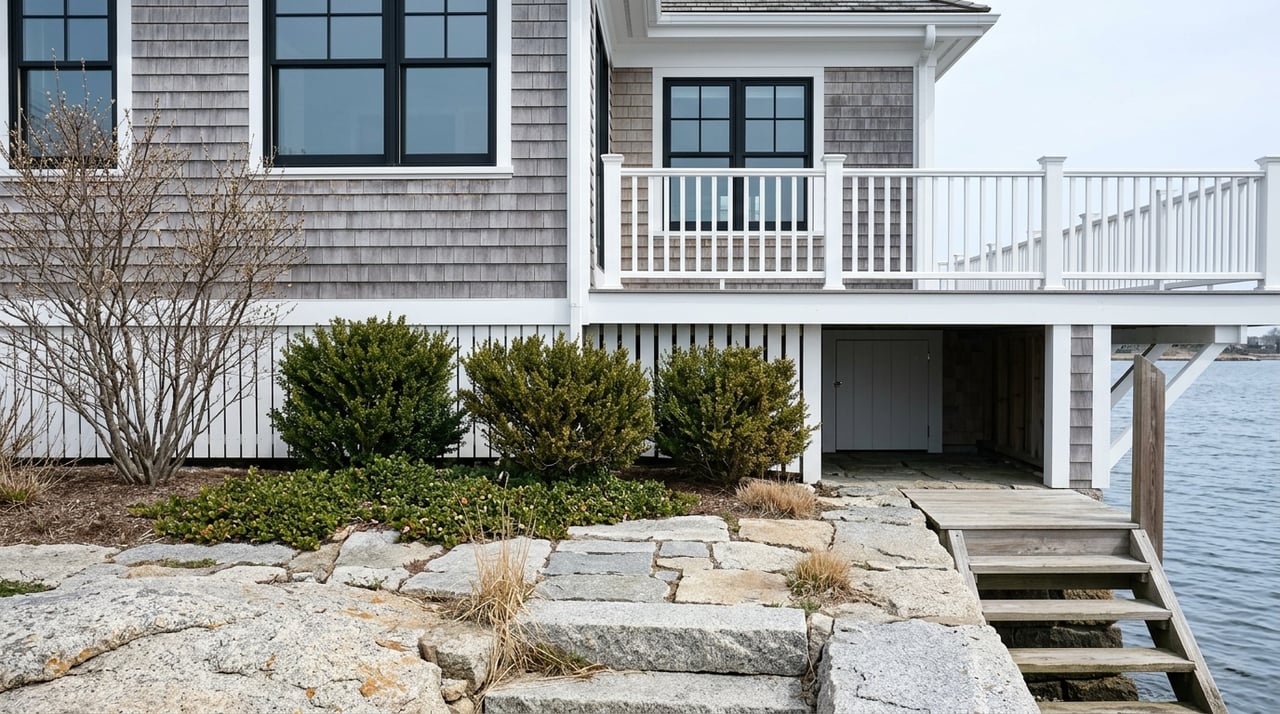
Not all waterfront is equally useful. 94 Sand Beach Road sold with 254 feet of frontage, a mooring, and stairs to the shore, while 88 Whitman Road emphasized frontage on Burnt Cove and space for a mooring.
For many buyers, scenic appeal is only part of the equation. Tide-accessible shoreline, boating utility, shore access, and the potential for mooring use can justify a meaningful premium when they are properly documented.
Condition and architecture shape price
Luxury buyers notice the difference between a property that feels ready to enjoy and one that may require system upgrades or renovation. 31 Green Head Lane is offered at $1.175 million with 5.7 acres, 450 feet of frontage, and a distinctive farmhouse setting, while 17 Seabreeze Avenue sold for $435,000 with smaller scale and partial shared frontage.
That spread shows why pricing cannot rely on “waterfront” as a single category. Finish level, privacy, layout, systems, and whether the property delivers a turn-key coastal experience all matter.
Start with the right comparables
The best pricing strategy begins by narrowing the comp set. In Stonington, that means matching a home to properties with similar shoreline character, utility, and positioning rather than pulling every waterfront sale in the ZIP code.
One of the biggest mistakes is mixing unlike waterfront types. Redfin’s waterfront search for 04681 includes both coastal and freshwater properties, and those should not be priced interchangeably.
Match coastal to coastal
A tidewater home with harbor views should be compared to other coastal properties with similar exposure and access. A pondfront or freshwater property may still be attractive, but it serves a different buyer need and often supports a different pricing range.
Match owned frontage to shared frontage
Owned shoreline frontage usually carries a different value than shared frontage or simple water access. For example, 17 Seabreeze Avenue included 50 feet of waterfrontage split between owned and shared frontage, which is not the same value profile as a property with extensive deeded shoreline.
Match use case to use case
A residential retreat, a working-harbor location, and a mixed-use waterfront property appeal to different buyers. 27 Main Street sold for $1.195 million with harbor frontage plus residential and commercial use, so it should not be used casually as a comp for a purely residential luxury home.
Price the features separately
Once you have the right comp set, the next step is adjusting for the features buyers actually value. This is where thoughtful pricing can protect your position and support a stronger launch.
Key pricing factors in Stonington
- View orientation: south-facing, west-facing, harbor-facing, and long open-water views
- Frontage quality: length of shoreline, owned versus shared, and usability
- Water access: stairs to shore, boating access, dock potential, or mooring practicality
- Setting: privacy, acreage, elevation, and relationship to the harbor or open water
- Condition: updates, deferred maintenance, and utility systems such as water and septic
- Architecture: period character, design quality, and how well the home matches the setting
This approach creates a more defensible price than relying on one broad number per square foot. In a market this thin, pricing needs a narrative backed by facts.
Document rights before setting the price
With luxury waterfront homes, details that sound simple in marketing can become major pricing issues during due diligence. Before you finalize a list price, it is worth confirming exactly what is being conveyed and what is subject to local rules.
Verify shoreland limitations
Under Maine shoreland zoning law, shoreland areas include land within 250 feet of the normal high-water line of a saltwater body, among other buffers. Stonington’s planning framework has also summarized lot and frontage standards in the tidal shoreland zone, and the town is revising development ordinances in 2025 and 2026.
That means future expansion or redevelopment assumptions should be verified before they are used as part of a pricing argument. If a buyer believes there is more flexibility than the ordinance allows, that can create friction later.
Clarify moorings and harbor use
Statements like “comes with a mooring” deserve careful review. According to Stonington’s Harbor Committee information, the harbor is municipally managed, and Maine law provides that mooring assignments are handled by the harbormaster and do not confer title to submerged or intertidal land.
For pricing, that distinction matters. Deeded frontage, shared access, dock rights, and a mooring assignment may each have different value, and they should not be treated as interchangeable.
Time the launch like a coastal property
Seasonality plays a real role in Stonington. The town’s economic resiliency strategy describes tourism as about 12% of the local economy and notes that the harbor village is much quieter in winter.
That pattern supports a practical pricing point: waterfront homes often show best when buyers can fully experience the light, views, and outdoor spaces. Spring and summer are usually the strongest seasons to present porches, shoreline access, and harbor activity in their best light.
What a strong launch should include
For an upper-tier waterfront listing, the presentation should do more than look polished. It should explain value clearly.
A thoughtful launch often includes:
- High-quality photography that captures light, horizon, and architectural detail
- Aerial or shoreline imagery that shows frontage and setting
- Clear notes on owned versus shared waterfront
- Specific explanation of mooring, dock, or access status
- Accurate descriptions of water and septic systems
- A pricing story that shows why the property belongs in its tier
For a distinctive coastal home, visual storytelling is not fluff. It helps buyers understand why one property belongs at a different price point than another only a few roads away.
Avoid overpricing in a thin market
Scarcity can support value, but it does not remove the need for discipline. In a market with very few sales, an aspirational list price can sit too long if buyers do not see a clear connection between the number and the property’s real attributes.
The goal is not simply to test the market. The goal is to launch at a price that reflects the home’s uniqueness while still feeling grounded in the best available evidence.
That usually means asking a few hard questions:
- Are the comparables truly coastal and functionally similar?
- Is the frontage deeded, shared, or limited in use?
- Are mooring or dock claims verified?
- Do the systems and condition support a luxury buyer’s expectations?
- Is the marketing presentation strong enough to justify the price from day one?
When those answers are clear, sellers are in a much stronger position.
The bottom line for Stonington sellers
In Stonington, full value is usually earned, not assumed. Buyers pay more when a property is visually distinctive, legally understandable, and practically useful, especially when those qualities are supported by the right launch strategy.
If you are preparing to sell a luxury waterfront home, pricing should start with the right comp set and then build outward from view, access, rights, condition, and presentation. That is how you avoid pricing a rare coastal asset like an average waterfront listing.
If you want a thoughtful, high-touch approach to positioning a distinctive Maine waterfront property, connect with Laura Farr for tailored guidance.
FAQs
What affects luxury waterfront home pricing in Stonington most?
- The biggest factors are view corridor, shoreline type, owned versus shared frontage, boating or mooring utility, architectural quality, condition, and how well the property’s rights and limitations are documented.
Why are ZIP code median prices less useful for Stonington waterfront homes?
- Public data in 04681 comes from a very small number of sales, so one transaction can move the median sharply and make broad averages less reliable for pricing a unique waterfront property.
Should freshwater and coastal homes be compared in Stonington pricing?
- No. Coastal and freshwater properties serve different buyer needs and should be matched separately when setting a list price.
Do moorings automatically transfer with a waterfront home in Stonington?
- No. Mooring use and location are subject to local harbor administration and Maine law, so any claim about a mooring should be verified carefully before it is used in pricing or marketing.
When is the best time to list a waterfront home in Stonington?
- Spring and summer are often the strongest seasons because buyers can better experience views, shoreline access, outdoor spaces, and the broader harbor setting.