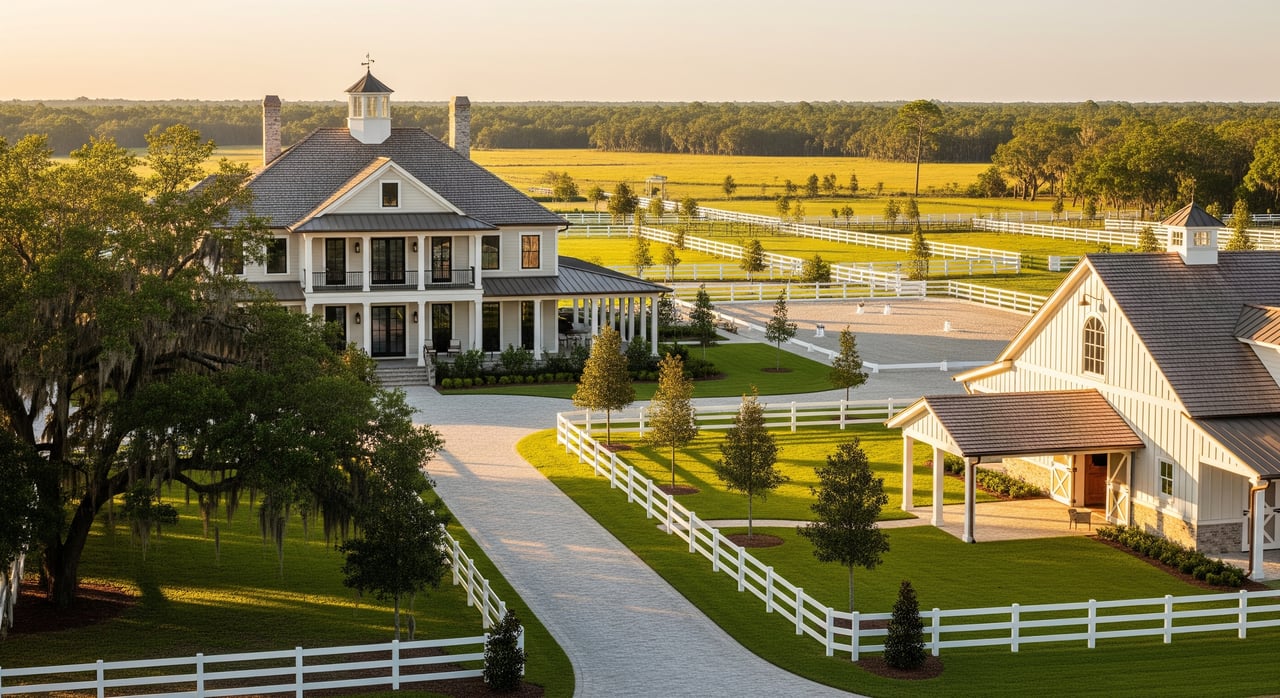
Shopping for a horse farm in Ocala can feel exciting and overwhelming at the same time. You want turnout that works year-round, safe fencing, and an arena that holds up in summer rains. You also want confidence that zoning, wells, and septic all check out before you close. This guide gives you a practical, Marion County–specific checklist you can take to showings and inspections so you know what to look for and what to verify. Let’s dive in.
Quick Ocala context
Ocala sits in a warm, humid subtropical climate with hot, wet summers and mild winters. Pastures often favor warm-season grasses like Bermuda and bahia, which thrive with good drainage and rotational grazing. Soils vary from well-drained sandy uplands to wetter low-lying areas, so evaluate water movement and any seasonal saturation. Always confirm zoning, permits, and any conservation limits with Marion County departments, and check flood zones with official maps as part of your due diligence.
The farm buyer’s checklist
Barns and stalls
- Inspect roof, trusses, siding, and pads for rot, staining, and water intrusion.
- Confirm stall count, dimensions, partitions, and flooring type, plus stall drainage.
- Look for ridge vents, cupolas, windows, and cross-breezes for humidity control.
- Check feed and tack storage for security and rodent protection; prefer hard floors.
- Review wash racks for non-slip surfaces, hot and cold water, and proper drainage.
- Verify electrical service, lighting, water pressure, and any generator backup.
Turnout and pastures
- Match acreage to your management style. Rotational grazing and hay can reduce land needs per horse.
- Identify forage types, bare spots, and weeds or toxic plants.
- Check compaction and mud at gates and high-traffic lanes; note any gravel or grid fixes.
- Confirm layout supports rotation, with reliable water access and safe gate placement.
Fencing and gates
- Note fence type: board, pipe, vinyl, or no-climb wire with a safe top rail.
- Inspect for rot, sagging wire, broken rails, and corroded hardware.
- Ensure smooth edges, visibility, and horse-appropriate height. Avoid barbed wire.
- Verify fence lines align with property boundaries and any easements or rules.
Arenas and footing
- Ask about base construction, drainage layer, and the riding surface mix.
- Look for consistent depth, minimal dust, and no standing water or weed growth.
- Check grading and perimeter drainage given heavy summer rains in Ocala.
- Confirm lighting, safe perimeter fencing, and access for equipment.
- Plan for maintenance needs like harrowing and watering, and the equipment required.
Drainage and erosion
- Walk swales, culverts, and low spots for standing water or erosion.
- Note any subsurface drains under arenas or paddocks and ask about performance.
- Identify wetlands or conservation areas that limit expansion or earthwork.
- Review manure runoff controls to protect nearby water bodies.
Irrigation and water
- Identify water sources: municipal, well, ponds, or springs, and confirm reliability.
- Ask about well depth, yield, and water quality testing for bacteria and nitrates.
- Map hydrants and irrigation zones for pastures and arena dust control.
- Confirm any permits needed for wells or surface-water use.
Utilities and septic
- Verify septic size, age, service records, and drainfield location.
- Review electrical capacity, sub-panels, and dedicated circuits for high-load barn needs.
- Test cell coverage and internet options for business, monitoring, and entries.
Manure and feed
- Locate manure storage and composting areas, checking containment and access.
- Confirm distance from watercourses and any runoff controls.
- Inspect feed storage for dryness, rodent control, and safe separation from electrical.
Access and logistics
- Test driveway surface and load-bearing strength for repeated trailer traffic.
- Ensure gate width, turning radii, and overhead clearance for rigs.
- Confirm trailer parking, loading zones, and covered storage for equipment.
Safety and biosecurity
- Review fire safety: extinguishers, water access, and clear evacuation routes.
- Ask about quarantine or isolation options for new or sick horses.
- Evaluate pest controls for flies and rodents.
- Plan for hurricanes and severe weather, including insurance considerations and evacuation routes.
Due diligence and inspections
Documents to request
- Current survey and as-built site plan with fences and easements marked.
- Building permits, certificates of occupancy, and renovation records for all structures.
- Maintenance logs for roofs, arenas, fencing, pest control, wells, and septic.
- Any manure management plans and fertilizer or pesticide application records.
- Past insurance claims related to wind, flood, or fire.
Inspections and tests
- General home inspection plus a specialized barn and structural assessment.
- Equine-property inspection focused on ventilation, drainage, storage, and suitability.
- Roof, electrical, and plumbing checks, with a well yield and water-quality test.
- Septic inspection and percolation assessment.
- Soil tests for pasture pH and nutrients to plan renovation and fertilization.
- Floodplain review and history of drainage complaints or ponding.
- Wetlands or protected habitat review if applicable.
- Fence line survey to confirm boundary alignment.
- Arena drainage evaluation, ideally after a heavy rain.
- Termite and wood pest inspection for barns.
Timeline tips
- Include contingencies for specialized inspections in your contract.
- Schedule structural, well, and septic tests early so results inform negotiations.
- Bring in arena, fencing, and drainage contractors for estimates during the inspection period.
Location and show access
Proximity to major venues matters for hauling, time, and training flow. Many buyers consider distances to the World Equestrian Center in Ocala, HITS circuits, and the Florida Horse Park. Evaluate typical drive times, trailer routes, parking access, and any seasonal traffic. Factor these logistics into daily routines and staff schedules.
Building your local team
- Equine property inspectors and agricultural-savvy building inspectors
- Arena and footing contractors with proven drainage results
- Fencing contractors experienced in horse-safe systems
- Drainage and civil engineers for stormwater and arena design
- Well drillers, pump specialists, and certified water-quality labs
- Septic designers and inspectors
- Manure management and composting consultants
- Farriers, large-animal veterinarians, and equine transporters
- UF/IFAS Extension advisors for pasture and forage planning
- Real estate attorneys familiar with agricultural easements and tax classifications
- Arborists for tree safety near barns and paddocks
When vetting, ask for Ocala-area references, recent project photos, licenses, and insurance. For arenas and drainage, request performance guarantees or maintenance plans. For fencing, confirm warranties and animal-safe installations. For wells, ask for yield data from comparable nearby wells.
Next steps
- Start with zoning and easement verification, then order a current survey.
- Line up your inspection team and schedule well, septic, and structural checks early.
- Walk the property after rain to see drainage in real conditions.
- Build a prioritized improvement plan, obtain multiple local bids, and budget for arena and fencing maintenance.
If you are ready to tour or want a curated shortlist of Ocala-area equestrian properties and trusted vendor introductions, reach out to Laura Farr. Let’s make your move to Horse Capital country smooth, informed, and successful.
FAQs
How many acres per horse in Ocala?
- It depends on pasture quality and management; rotational grazing with hay support can reduce acreage needs per horse in Florida’s warm, humid climate.
What fencing is safest for horses?
- There is no single best option; many buyers choose no-climb wire with a top rail or quality board fencing, and you should avoid barbed wire.
How should I assess an arena in summer rains?
- Ask about the base and drainage layer, check slope and perimeter drains, and try to evaluate footing after heavy rain for standing water or soft spots.
What well and water issues are common locally?
- Aquifer yields can vary and sandy soils may need irrigation support; verify well yield and test water quality for bacteria and nitrates.
What should my hurricane plan include for a farm?
- Confirm barn tie-downs and shutter options, stock emergency supplies, prepare evacuation routes, and review insurance specifics for wind and storm risks.
How do venues like WEC and HITS affect my search?
- Proximity shapes daily hauling time and training schedules; map typical drive times, trailer routes, and parking access before you commit.