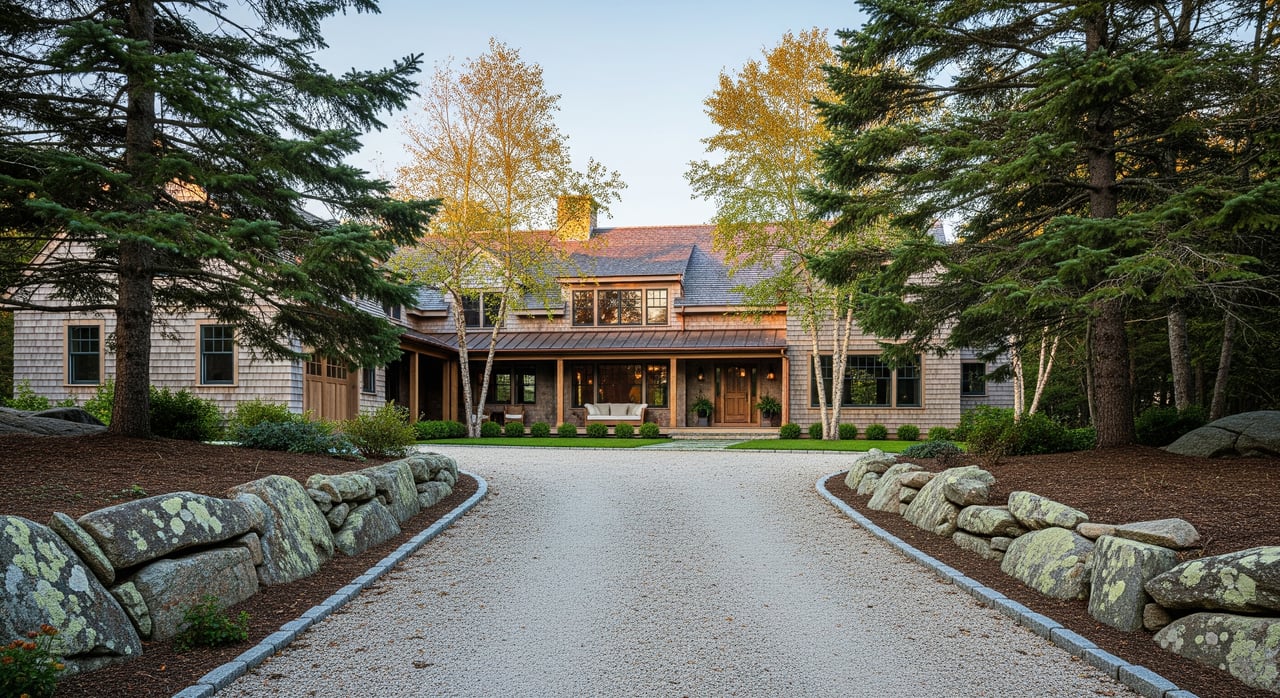
Considering a tucked‑away coastal home in Blue Hill that sits on a private road? You are not alone. Many of the most scenic properties in Hancock County rely on privately maintained ways, which can be wonderful for privacy yet tricky for access, costs, and financing. In this guide, you will learn what a private road means in Blue Hill, how to evaluate maintenance and budgets, what lenders and insurers look for, and the exact documents to request. Let’s dive in.
What a private road means in Blue Hill
In Blue Hill, a private road is not accepted by the town for public maintenance. That means the landowners who use the road are typically responsible for upkeep through an easement, informal arrangement, or a road association.
This setup affects day‑to‑day living. Snow plowing, grading and gravel, drainage, vegetation control, liability, and long‑term repairs are paid for and coordinated by the owners unless the road has been formally accepted by the town. Understanding how this is organized will help you plan for costs and avoid surprises.
Legal and title: prove your access
Without clear, documented access, you can face title issues and lender delays. Start your review as early as possible so you have time to resolve questions before closing.
Key documents to locate and review
- Deeds for the property and adjoining parcels that reference the road or a right‑of‑way.
- A recorded road maintenance agreement, covenants, or association bylaws that set duties and cost sharing.
- Plats or surveys that define road location, width, and turning radii.
- Any liens, judgments, or notices recorded against the road or the association.
What to verify in the paperwork
- Nature of access: Is there a recorded easement? Is access express, implied, or prescriptive, and does it allow maintenance and repairs?
- Maintenance obligations: Who maintains the road, and how are costs divided — equal shares, usage, frontage, or lot size?
- Governance: How are votes taken for repairs and special assessments? What majority is required for changes?
- Enforcement: Are there remedies for non‑payment such as liens or foreclosure? Any dispute‑resolution process?
- Standards: Minimum easement width, surface requirements, and drainage expectations.
Practical steps to stay on track
- Order a title report and deed chain, and request all road documents from the seller or your attorney.
- Check the Hancock County Registry of Deeds to confirm recorded easements and agreements.
- If language is ambiguous, hire a surveyor to map the road centerline and the easement width.
Maintenance, plowing, and seasonal access
Blue Hill’s coastal climate brings winter storms and spring thaw. Private roads need consistent upkeep to stay passable and safe in all seasons.
Typical upkeep to expect
- Routine grading and gravel, pothole repair, ditching and culvert maintenance, and vegetation control.
- Snow removal and sanding during winter storms.
- Capital projects such as culvert replacement, drainage upgrades, ledge work, and surface reconstruction.
Winter and mud season realities
- Plowing is usually handled by a contractor hired by a road association or by individual owners who share costs.
- Freeze‑thaw cycles can create soft sections and ruts. Spring “mud season” may limit heavy vehicles or require temporary restrictions.
- In low‑lying or coastal areas, review drainage and any flood exposure. Metal culverts can be vulnerable to salt.
Budgeting basics for owners
Actual costs vary widely by road length, surface, drainage, and participation. Expect these categories:
- Routine grading and summer upkeep: often several hundred to a few thousand dollars per season for small shared roads.
- Plowing and sanding: priced per season or per visit, with costs shared per lot, usage, or frontage depending on the agreement.
- Major repairs or rebuilding: from several thousand to tens of thousands, depending on scope and condition.
Well‑run associations maintain a reserve fund for capital work. Ask about the current balance, the history of special assessments, and the timeline for expected projects.
Operational questions worth asking
- Who plows, on what schedule, and how are costs billed?
- How is emergency access handled after large storms?
- Are there written maintenance standards for width, surface, and drainage?
- What major work was done recently, and what is anticipated next?
Lenders, title insurance, and coverage
Most lenders and insurers will ask whether your private road allows year‑round access for residents and emergency services. Getting ahead of these requirements can keep your closing on schedule.
Mortgage requirements to expect
- Lenders commonly require documented legal access and proof that the road is suitable for vehicles and emergency services.
- Some lenders — including certain government‑backed programs — have stricter standards and may ask for a recorded maintenance agreement or specific improvements.
- Speak with your lender early about the road’s status. If they require documents or upgrades, you will want time to negotiate who pays and when the work occurs.
Title insurance considerations
Title companies typically insure access if there is a recorded easement or public access. Unrecorded or ambiguous access can result in exceptions or limited coverage.
Ask your title agent about any access‑related exceptions and whether endorsements are available.
Homeowners and liability insurance
- Insurers may ask about emergency access and could adjust premiums or coverage if access is unreliable.
- If a road association exists, confirm it carries appropriate liability insurance, and verify member responsibilities for any maintenance performed by owners.
Emergency services and municipal acceptance
- Contact Blue Hill’s fire department and local EMS to confirm whether your road meets their access standards and turning requirements.
- If the road is not accepted by the town, municipal plowing and maintenance will not be provided unless formal acceptance occurs in the future.
Buyer checklist for Blue Hill private roads
Use this list to organize your due diligence during the offer and contingency periods.
- Obtain recorded easements and deed language for access and maintenance rights.
- Request the road maintenance agreement, bylaws, recent minutes, current budget, and reserve statements.
- Collect current snow‑plowing and maintenance contracts, plus invoices for the past 2 to 3 years.
- Ask for history of special assessments, recent major repairs, and any contractor bids for future work.
- Review any surveys, as‑built plans, or engineering reports for the road.
- Order a title search and have a title attorney flag any ambiguous access language.
- Commission or review a current certified survey that shows the road centerline and easement width.
- Drive and walk the road during typical seasonal conditions — winter and mud season if possible.
- Request written confirmation from local emergency services about access standards and policies.
- Obtain at least one estimate for annual grading and one for winter plowing to use in budgeting.
Smart questions to ask sellers and associations
- Is the road publicly accepted by the Town of Blue Hill? If not, is acceptance being pursued?
- Is there a recorded maintenance agreement? May I have a copy?
- How are costs allocated among users — equal shares, frontage, lot size, or usage? Has that changed recently?
- What are the current annual costs for maintenance and plowing? How much is in reserves?
- Have special assessments been levied in the past 5 to 10 years? For what projects and how large were they?
- Who is the current plow contractor, and is the contract per season, per visit, or a flat fee?
- Are there seasonal restrictions during spring thaw? Are there written rules?
- Have there been disputes over maintenance, access, or non‑paying members? Any pending litigation?
- When was the road last re‑graveled or reconstructed? When were culverts last replaced?
- Do emergency vehicles routinely use this road? Has the fire department raised any concerns?
Suggested timeline during your purchase
- Early — offer stage: Ask about the road’s legal status and request easements and agreements as part of your contingencies.
- Pre‑inspection and title period: Order the title search and survey, obtain contractor and plow estimates, and review association records.
- Prior to closing: Confirm with your lender that access meets their requirements and ensure any required documents are recorded or escrowed.
Common pitfalls and how to avoid them
- Ambiguous or unrecorded access: Verbal agreements are risky. Insist on recorded documents and survey clarity.
- Underfunded associations: Low reserves and frequent special assessments can strain your budget. Review financials and past assessments.
- Inadequate emergency access: Narrow, steep, or poorly maintained roads can affect safety, insurance, and resale value.
- Contractor and neighbor disputes: Without clear governance and enforcement, maintenance can lapse. Confirm voting rules and remedies for non‑payment.
- Lender surprises: Some loan programs have strict access standards. Align documents and expectations early to protect your timeline.
Final thoughts
Buying on a private road in Blue Hill can be a great fit if you do your homework. Clear access rights, a workable maintenance plan, reliable plowing, and realistic budgeting will protect your enjoyment and your investment. If you would like help coordinating documents, estimates, and local contacts during your search, connect with Laura Farr for tailored guidance.
FAQs
What does “private road” mean for a Blue Hill home purchase?
- It means the road is not maintained by the town, so owners using it are responsible for upkeep, costs, and coordination through easements or a road association.
What documents should I request before making an offer on a private road property?
- Ask for recorded easements, the road maintenance agreement or bylaws, recent budgets and reserves, plowing and maintenance contracts, invoices, and any surveys or engineering reports.
How do lenders view homes on private roads in Hancock County?
- Many lenders require documented legal, year‑round access and may ask for a recorded maintenance agreement or improvements before approving a loan.
What seasonal issues affect private roads in coastal Maine?
- Winter storms require plowing and sanding, and spring thaw can create soft or muddy conditions that may limit heavy vehicles or require temporary restrictions.
How much should I budget for road maintenance and plowing?
- Costs vary by road length, condition, and number of owners, but plan for seasonal grading and plowing, plus reserves for periodic re‑graveling or larger drainage projects.
Who handles liability for a private road in an association?
- Well‑run associations carry liability insurance for common areas and activities; confirm policy limits and individual owner responsibilities for any work they perform.